Build on its heritage, Laroche is committed to a global approach of responsibility and sustainability, which is reflected in an agro-ecological technical specification.
A holistic approach
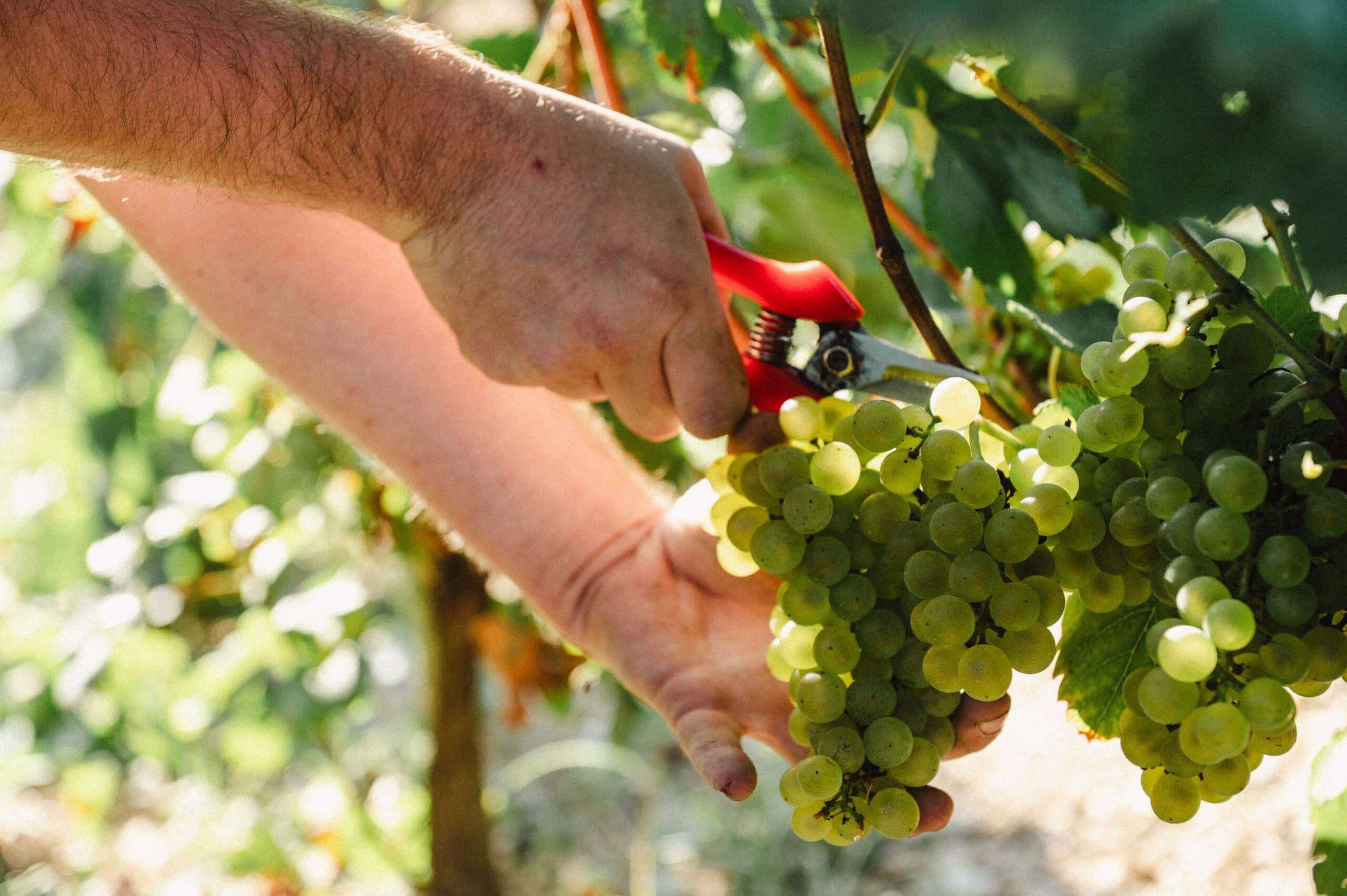
How do we define it? It’s a holistic approach that involves the constant pursuit of balance within the vineyard’s environment. This is achieved, for instance, by prioritizing the use of contact and non-systemic products, employing homeopathy or phytotherapy to strengthen the plant’s natural defenses, mastering biological control techniques such as sexual confusion, and also by replanting with mass selections to consistently produce the highest quality grapes possible.
Respect for the soil is a key element : allowing it to rest for three years before any replanting, by sowing plant covers to maintain vegetation, and of course, by working the soil without the use of any herbicides.
The preservation of natural resources cannot be achieved without human involvement, and human are at the heart of this approach. Therefore, at Domaine Laroche, each member of the vineyard team is entrusted with the responsibility for a specific plot throughout the year.
Meticulous organization in the vineyard
in Chablis
One person, one plot: each member in the vineyard team takes special care of the same vines throughout the year.
Regularly trained, the team leads a sustainable viticulture, undertaking numerous initiatives and experimental trials each year.
Sustainable Viticulture
in Chablis
and in the South of France
Agroecological principles and practices ensure the environmental balance of the vineyards. Domaine Laroche in Chablis obtained HVE 3A certification as early as 2016, making it one of the pioneers in Burgundy.
Concurrently, the vineyard in the South of France is fully certified for Organic Agriculture.
Biodiversity, a pillar of environmental balance
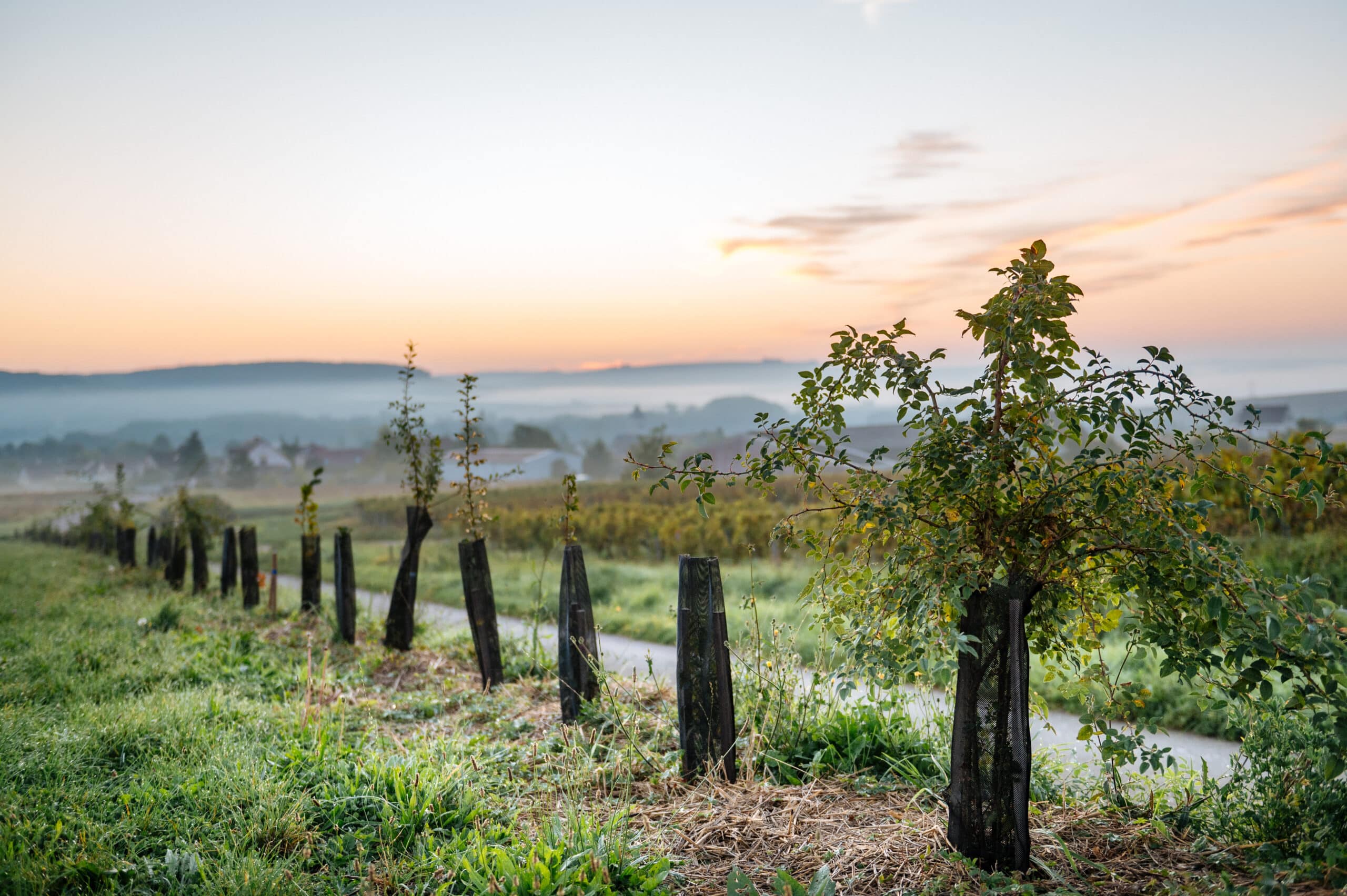
The long-term sustainability of the vineyard for future generations relies on the preservation of biodiversity. Numerous initiatives are undertaken with the League for the Protection of Birds (LPO), and the planting of hedgerows around the plots helps preserve the habitat of various beneficial species present in the vineyards.
More recently, Laroche installed beehives in the Vaudevey valley to encourage the development of natural floral species around the Chablis vines.
Biodynamics in the Grand Crus
in Chablis
The concept involves utilizing the soil and the vine’s environment as an energy source for the plant, thereby strengthening its immunity and its adaptation to climate change.
Key Figures, tracing over 1000 years of history and expertise
1
King Grape Variety: Chardonnay
2
sites Domaine Laroche in Chablis and La Chevalière in the South of France
40
years as a pioneer in cultivating and vinifying Chardonnay in the South of France